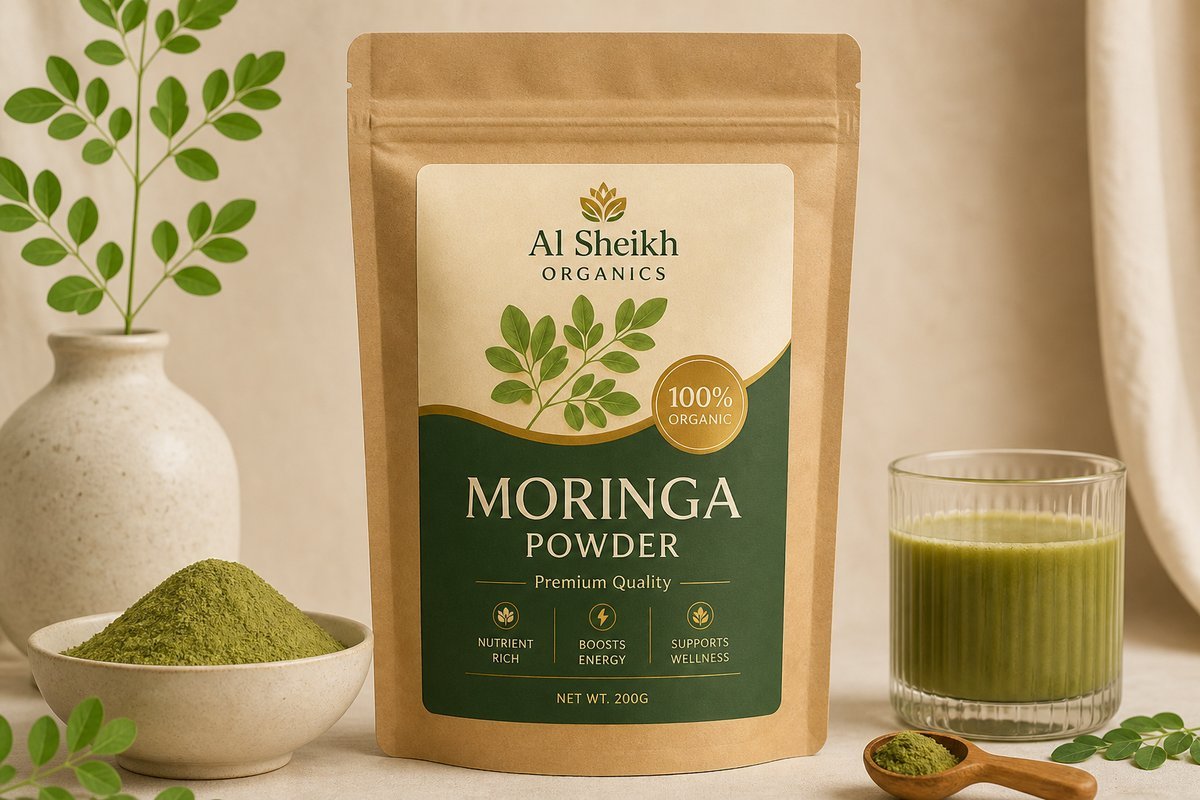
This is a practical kitchen guide for people searching how to use moringa powder, including shoppers in Pakistan. Moringa leaf powder is dried, ground moringa leaves. Treat it as a strong-tasting greens powder you add to food you already eat. It is not a medicine and it does not replace vegetables, sleep, or a clinician.
If you already bought a pouch (or you are comparing jars), the useful question is portion size and where it tastes least grassy. For a product page, see Moringa Powder. Prefer a drink format? See Moringa Tea.
How much moringa powder to start with
Competitors who rank for this query all say the same practical thing: start smaller than social media scoops. A working pattern for generally healthy adults:
| When | Amount | Notes |
|---|---|---|
| Days 1–7 | ¼ teaspoon once a day | Taste and stomach first. Skip a day if it feels like too much. |
| Week 2 onward | ½ to 1 teaspoon a day | Only if week 1 sat well. Split across two meals if you prefer. |
| Do not start here | A heaped tablespoon on day one | Mostly bitterness and a higher chance you quit. |
The label on your pack wins if it gives a serving. Use a dry ¼ teaspoon, not a cooking tablespoon.
Pakistan kitchen uses (dal, chai, dahi, lassi)
You do not need a smoothie bar. These are the places a small spoon actually disappears into food people already cook.
- Dal or khichdi: Cook as usual. Take the pot off the heat. Stir in ¼ teaspoon moringa. High boil on the stove is where the flavour turns harsh.
- Dahi or lassi: Mix ¼ teaspoon into plain dahi with roasted jeera, or into a mango lassi so the fruit covers the grassiness.
- Chai-adjacent drink: Use warm, not boiling, milk or water. Stir powder in a cup. If you want a proper leaf drink, brew moringa tea instead of dumping powder into rolling-boil chai.
- Paratha or roti dough: A pinch in atta for a small batch. More than a pinch turns dough grey-green and tastes like spinach powder.
Keep lemon or a little fruit nearby. Acid and sweetness make the first week easier. This is taste advice, not a nutrient-absorption medical protocol.
Smoothie method (if you have a blender)
- Start with ¼ to ½ teaspoon moringa powder.
- Add banana or mango, liquid, and optional yoghurt.
- Blend until smooth. If it still tastes like lawn clippings, add fruit. Do not add a second heaped scoop.
Step-by-step blender templates (tropical, cocoa, green) live on our smoothie and tea mixing guide. Use that page for recipes. Use this page for portions and everyday food.
Powder vs tea vs capsules
| Format | Best for | Watch-out |
|---|---|---|
| Powder | Dal, dahi, smoothies | Taste is obvious if you over-scoop |
| Tea | Kettle-only days | Milder; different job than a packed spoon of powder |
| Capsules | Travel | No kitchen control; still read the label |
Quality checklist before you buy
- Colour: lively green, not dull brown
- List: basically moringa leaf, not a mystery blend
- Pack: sealed, with a date or lot when the brand prints one
- Claims: skip packs that promise to cure disease
Frequently asked questions
How do you use moringa powder every day?
Pick one slot (breakfast dahi or lunch dal). Use ¼ teaspoon for a week. If that is comfortable, move toward ½ teaspoon. Keep the rest of the day ordinary: meals, water, sleep.
Can I take a tablespoon on day one?
Do not. Large scoops mostly increase bitterness and the chance of stomach protest. Start at ¼ teaspoon.
Should I mix it in boiling water?
Use warm liquid, not a rolling boil, if bitterness bothers you. For a brewed drink, use tea bags or leaf tea per the label.
Does moringa powder replace vegetables?
No. It is a convenience greens powder, not a sabzi stall.
Is moringa an immunity booster?
That is marketing language. We describe it as a greens powder habit. Immune health depends on sleep, food variety, vaccination where relevant, and clinical care, not one pantry item.
Who should ask a clinician first?
Anyone pregnant, nursing, on medication, or managing a diagnosed condition should check before adding concentrated herbal powders.
Related products
Educational note: This article is for general kitchen and shopping guidance only. It is not medical advice, and it does not diagnose, treat, cure, or prevent any disease. If you are pregnant, nursing, taking medication, or managing a health condition, talk with a qualified clinician before using herbal products.