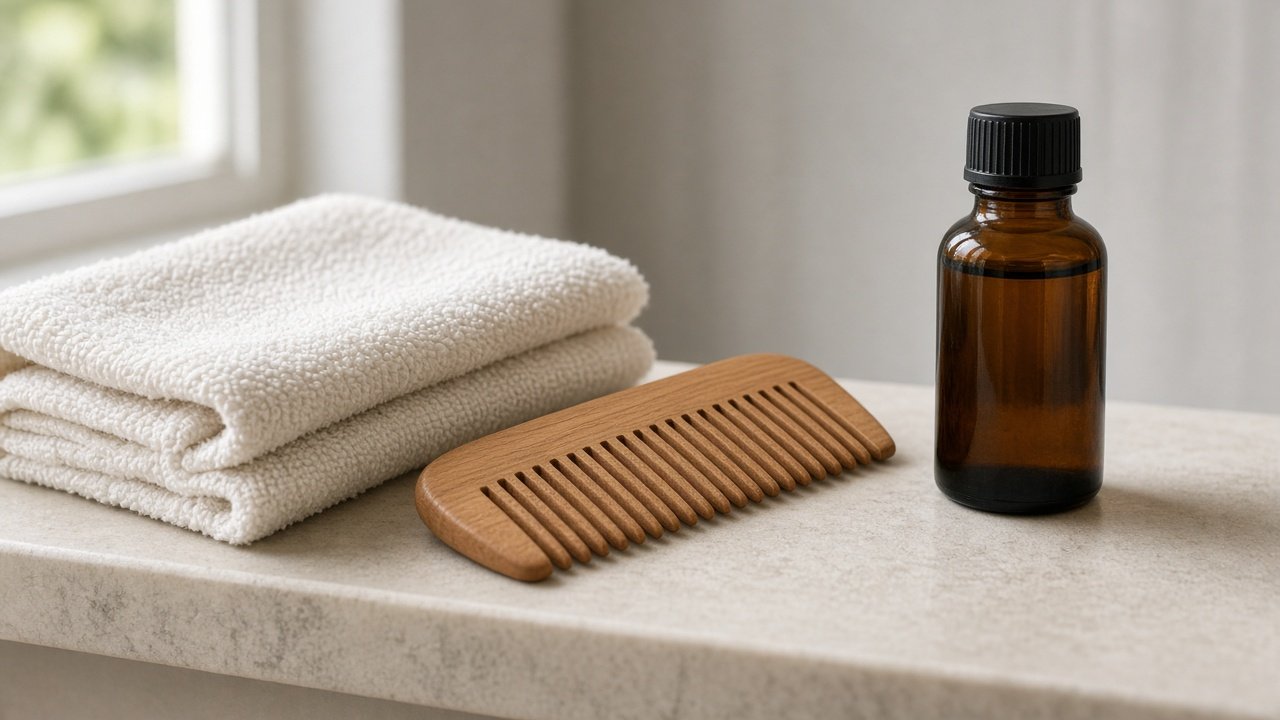
If you want to wash hair oil out hard water, aim the shampoo at the scalp and rinse longer than you do on a soft-water day. Al Sheikh Ultimate Hair Growth Oil is a 150ml pre-wash blend from Al Sheikh Organics in Lahore, labelled Strengthens & Nourishes. Argan, jojoba, and rosemary are the headline oils. Walnut and lavender show beside the bottle in brand stills. Those oils give slip before the wash. Hard water makes them linger if you rush. The bottle is a cosmetic, not a treatment, and a second shampoo is a normal fix.
Why oil lingers when the water is hard
Hard water carries more minerals. You see it as white crust on a shower head, spots on a steel mug, or a kettle that needs frequent descaling. Those minerals make lather thinner and leave a film that grabs oil. Argan and jojoba are meant to cling enough to lubricate a massage. In hard water they need a real shampoo, not a quick splash.
Lahore, Karachi, and Islamabad homes do not all share one water supply. Some streets get a harsher tap than the next sector. Tanker water can differ again. You learn your water by how shampoo behaves, not by a number this article will invent. If lather dies fast and hair feels coated after drying, treat the rinse as a hard-water rinse.
This is not a fault in a careful, small dose. A palmful will linger more than a teaspoon, so amount still matters. But even a modest coat can feel waxy if you only pass shampoo through the ends and call it done. The scalp is where the oil was massaged in. That is where the wash has to focus.
The shampoo pass that lifts the oil
Wet the hair fully with lukewarm water first. Hot water makes the scalp tight and does not magically cut oil. Cool water can feel pleasant, but you still need shampoo. Work a small amount of your usual shampoo onto the scalp with fingertip pads, the same gentle pressure you used to apply the oil. You are lifting film, not sanding the skin.
Spend most of the first minute on the parts, the crown, and the nape. Let the lather move down the lengths as you rinse. If the lengths were heavily coated, give them a short second pass with the leftover lather, then rinse until the water runs clear. Squeak is less important than a scalp that does not feel slippery under your fingers.
Conditioner goes on the ends only, after the oil is gone. Conditioner on a still-oily root makes hard water’s film worse. If you like a mask, keep it off the scalp on oil days. The Al Sheikh hair growth oil guide explains the blend. End care alone is in the argan oil benefits for hair ends article. Legal wording sits on the disclaimer.
- Rinse with lukewarm water until hair is fully wet.
- Shampoo the scalp with pads, not nails.
- Rinse clear, then shampoo again if roots still slip.
- Condition the ends only, then rinse those too.
Water temperature, time, and the second shampoo
Give the rinse two or three minutes, not twenty seconds. In a city with short supply, that can feel wasteful. Use a mug or a low-flow shower and still rinse the scalp twice. A bucket wash works if you pour through the roots and do not reuse the oily water for the final rinse. The last pour should be the cleanest water you have.
A second shampoo is not a failure. It is the hard-water setting. Use a smaller amount the second time. You want a fresh lather, not a mountain of foam that is hard to rinse in the same mineral water. If the second lather appears quickly, you have lifted most of the oil. If it still will not foam, you used too much oil, or product from earlier in the week is still there.
Wait until the hair is fully rinsed before you judge. Oil and shampoo mixed together feel slick even when they are about to rinse away. Dry the roots with a cotton T-shirt and feel them again. Truly clean roots feel soft, not plastic. If they feel plastic, one more gentle shampoo beats a day of dull hair.
Habits that help in Lahore and Karachi bathrooms
Clean the shower head when the holes crust over. That does not soften the water by itself, but it stops grit spraying onto a rinsed scalp. If you store water in a tank, let the first rusty minute run before it hits your hair. That first burst is sediment. It is a bad final rinse.
On oil day, plan the wash when the supply is usually on. A half rinse at 7 a.m. and a “finish later” plan leaves jojoba on the scalp under a helmet or a dupatta. If the water cuts out mid-shampoo, use stored clean water for the scalp before you leave the house. A coated commute is itchier than a five-minute delay at home.
Karachi humidity keeps hair damp longer, so any film shows as limp strands by noon. Lahore heat makes you sweat into that film. Islamabad winters add heaters and caps. The wash method stays the same. Only the number of oil days should drop if washing water is scarce that week. Check the product page for the current PKR price when you buy. Do not add a second mystery bottle to “cut” the first.
When a clarifying wash is enough, and when it is too much
A clarifying shampoo once in a while can help if you oil, use styling spray, and live with hard water. It is a sometimes tool. Used every day, it can leave lengths harsh, and harsh lengths snap when you comb them. Once every couple of weeks is plenty for most people who already shampoo oil out properly.
Do not mix vinegar, baking soda, or dish soap into a hair wash because a forward said it breaks hard water. Those mixes can irritate the scalp and strip the lengths. Your normal shampoo, applied twice to the scalp, is the first fix. If your clinician gave you a medicated wash, follow that label and ask before you add a cosmetic oil on the same day.
- First fix: lukewarm water and two scalp-focused shampoos.
- Sometimes: a clarifier every couple of weeks if buildup returns.
- Skip: dish soap, soda, and homemade acid mixes.
- Pause oil if the scalp stings, and ask a clinician if it continues.
Clumps of hair, a painful scalp, or bald patches are not a rinse problem. See a dermatologist. The American Academy of Dermatology covers causes on its hair fall causes page. A clearer shampoo will not explain those signs.
What not to do if the hair still feels coated
Do not pile on more oil to “smooth” a waxy feel. That is the same film plus a new coat. Do not blow-dry on high heat to hide it. Heat sets the feeling of stiffness into the ends. Shampoo again, or wait until the next water slot and wash properly.
Do not scrub with nails to force lather. You will make the scalp sore and blame the water. Pads are enough. If makeup, sunscreen, or a hairline gel is in the mix, that residue also blocks lather. Wash the hairline gently so those products do not stay in the baby hairs.
Next oil day, use less. A quarter teaspoon less often solves a wash problem that three shampoos are only chasing. Fine hair in particular should drop to the smallest spoon that still lets you massage. Thick hair can keep a bit more on the ends, but the scalp coat should still rinse in two passes.
One shampoo, two shampoos, or a clarifier
Pick the column that matches how the hair feels after it dries, not how the bottle marketing sounds.
| After drying | What to do this wash | Next oil day |
|---|---|---|
| Roots feel soft, ends feel normal | One careful scalp shampoo was enough | Keep the same small amount |
| Roots feel coated or look wet | Second shampoo, longer rinse | Use less on the scalp |
| Buildup after sprays plus oil | Clarifier once, not daily | Skip leave-in on the roots |
| Scalp stings or flakes painfully | Gentle rinse and stop experimenting | Pause and ask a clinician |
Frequently asked questions
How many shampoos does hard water usually need?
Often two short ones, both aimed at the scalp. The first lifts most of the pre-wash oil. The second confirms the roots are not still sliding under your fingers. Use less shampoo the second time so you can rinse it out. If one shampoo already leaves roots soft after drying, you do not need a second out of habit.
Can I wash hair oil out hard water with water only?
Not reliably. Argan and jojoba need shampoo, and minerals in the water make a water-only rinse weaker. Wetting the hair and calling it clean leaves a coat that dust sticks to. Use your regular shampoo. If supply is short, still save enough clean water for a real scalp rinse before you go out.
Should I buy a water filter just for hair?
Some homes do, but this routine does not depend on one. A filter is a plumbing choice, not a step this cosmetic requires. Start with amount, two shampoos, and a long enough rinse. If every wash still feels waxy even with little oil, a plumber or a water test is a saner next step than a new oil.
Does hotter water remove oil faster?
No. Very hot water can irritate the scalp and roughen lengths. Lukewarm water plus shampoo does the lifting. Give yourself a few minutes of rinse time. Heat is not a substitute for lather on the scalp. If your tap only runs very hot, mix in cooler stored water so the wash stays comfortable.
Why does hair feel oily again by evening?
Sweat, humidity, and a dose that was high can bring the feeling back even after a decent wash. Fine hair shows it first. Check that you actually rinsed the roots, then lower the next pre-wash amount. A helmet or tight cover on damp hair also presses leftover film flat. Dry the roots before you cover them.
Key takeaways
- Hard water needs shampoo on the scalp, not a quick splash.
- Two short shampoos are a normal oil-day setting.
- Keep conditioner and masks off the roots until the oil is gone.
- Skip dish soap and kitchen hacks.
- If the coat remains, use less oil next time rather than more.
Conclusion
To wash hair oil out hard water, wet the hair, shampoo the scalp, rinse, and shampoo again if roots still slip. Al Sheikh Ultimate Hair Growth Oil comes off with that ordinary care when the amount was modest. Lukewarm water and patience beat hotter water and harsher mixes. The current PKR price is on the product page when you are ready to buy.
Wellness note: Educational content only. Al Sheikh Organics products are cosmetics, not medicines, and are not intended to diagnose, treat, cure, or prevent any disease. Talk with a clinician if you are pregnant, nursing, on medication, or dealing with a scalp condition. Individual results vary.